
Posted On: August 3, 2026 by NARA in: General
Preparing a budget has always involved balancing competing priorities. For rehab providers, that challenge continues to grow as workforce pressures, reimbursement complexity, regulatory expectations, technology demands, and referral competition all influence financial planning decisions.
As therapy organizations begin planning for 2027, many leaders are asking the same question: Where should we invest to strengthen operational performance, support clinicians, and position our organizations for long-term sustainability?
The answer is rarely found in a single budget line item. Effective rehab organization budgeting requires a strategic approach that aligns financial decisions with organizational goals, patient needs, workforce realities, and emerging industry trends.
Why 2027 Budget Planning Should Start with Strategy
Strategic budgeting helps rehab providers allocate resources toward initiatives that improve organizational resilience, clinical quality, workforce stability, compliance readiness, and operational performance. Rather than focusing solely on cost control, rehab organizations should prioritize investments that support long-term sustainability and adaptability.
Many therapy organizations are operating in an environment where reimbursement remains under pressure while expectations for quality reporting, documentation accuracy, patient outcomes, and operational efficiency continue to increase. At the same time, leaders are managing recruitment challenges, clinician burnout concerns, evolving payer requirements, and growing competition for referrals.
That reality makes 2027 healthcare budgeting less about predicting the future and more about building an organization that can adapt to change.
Successful rehabilitation organization budget planning starts by asking:
- Which operational challenges are creating the greatest strain today?
- What investments could reduce risk or improve efficiency?
- Where are we vulnerable to workforce, compliance, or reimbursement disruptions?
- Which capabilities will support our strategic goals over the next several years?
Organizations that answer these questions before budget season often enter the year with greater clarity and stronger organizational alignment.
Where Should Rehab Organizations Invest for 2027?
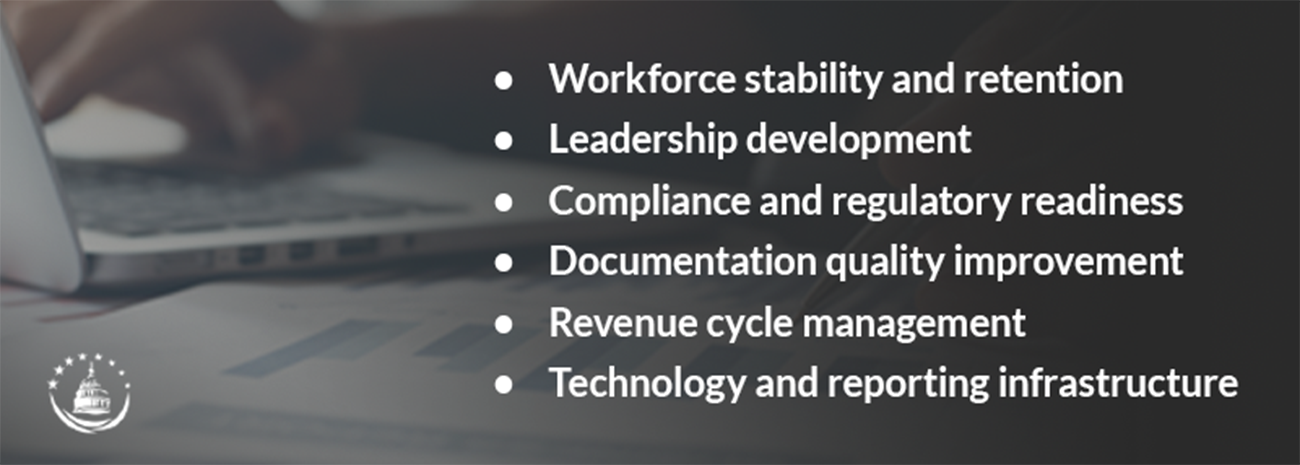
For many providers, the strongest investment priorities for 2027 will likely include some combination of:
- Workforce stability and retention
- Leadership development
- Compliance and regulatory readiness
- Documentation quality improvement
- Revenue cycle management
- Technology and reporting infrastructure
- Outcomes measurement capabilities
- Value-based care preparation
- Referral relationship development
- Cybersecurity protection
- Staff education and professional development
- Industry advocacy and peer collaboration
The right mix will vary by organization, but these areas consistently influence operational performance, financial stability, and long-term growth.
Workforce Stability and Leadership Development
No discussion of rehab workforce planning is complete without acknowledging the ongoing staffing challenges affecting many therapy organizations.
Recruitment, retention, succession planning, and burnout prevention continue to impact providers across physical therapy, occupational therapy, and speech-language pathology settings.
As organizations evaluate budget priorities, workforce investments may include:
- Retention initiatives
- Leadership training programs
- Clinical mentorship structures
- Career development pathways
- Succession planning efforts
- Employee engagement initiatives
- Improved onboarding programs
Leadership development deserves particular attention. Many rehab organizations have talented clinicians who are promoted into supervisory positions with limited formal leadership training. Investing in management development can improve communication, accountability, operational consistency, and staff retention.
Strong leaders often have a meaningful impact on organizational stability and culture.
Related Reading: How to Build Sustainable Processes Instead of “Quick Fixes”
Documentation, Compliance, and Regulatory Readiness
Compliance has become increasingly intertwined with operational performance.
Documentation quality affects reimbursement, audit preparedness, payer relationships, quality reporting, and clinical communication. As regulations and payer expectations continue to evolve, organizations that underinvest in compliance infrastructure may expose themselves to unnecessary risk.
Potential compliance investment areas include:
- Internal auditing programs
- Documentation education
- Compliance consulting resources
- Policy and procedure updates
- Regulatory monitoring tools
- Quality assurance processes
Many rehab leaders view compliance spending strictly as a defensive expense. In reality, effective compliance systems can reduce administrative friction, improve documentation consistency, and strengthen organizational confidence when responding to audits or payer inquiries.
Revenue Cycle and Reimbursement Performance
Even small improvements in reimbursement performance can have a substantial impact across an organization. As payer requirements become more complex, revenue cycle management remains one of the most practical areas for investment.
Budget priorities may include:
- Revenue cycle technology
- Coding education
- Authorization workflow improvements
- Denial management initiatives
- Billing process optimization
- Financial reporting enhancements
Organizations frequently focus on generating additional referrals while overlooking inefficiencies that already exist within the revenue cycle. Evaluating reimbursement leakage, denial trends, authorization delays, and billing workflows can help identify opportunities for improvement before pursuing expansion efforts.
Technology That Supports Care, Operations, and Reporting
Technology conversations often center on software purchases, but effective investment strategy requires a broader evaluation.
What Should Rehab Providers Consider Before Adding New Technology?
Before adopting new technology, providers should evaluate whether the solution solves a clearly defined organizational problem, integrates with existing workflows, supports compliance requirements, improves efficiency, and delivers measurable value for clinicians, administrators, or patients. Technology investments should support operations, not complicate them.
Potential investment areas include:
- Documentation platforms
- Practice management systems
- Business intelligence tools
- Patient engagement solutions
- Scheduling optimization software
- Remote monitoring technologies
- Outcomes tracking platforms
- Workflow automation tools
The most successful technology investments typically address a specific operational challenge rather than pursuing innovation for its own sake.
Outcomes Measurement and Value-Based Care Preparation
Interest in value-based care rehabilitation models continues to grow across healthcare.
Whether organizations are currently participating in value-based arrangements or preparing for future opportunities, outcomes measurement capabilities deserve budgeting attention.
Potential investments include:
- Functional outcomes reporting
- Patient satisfaction measurement
- Quality dashboards
- Data analytics programs
- Benchmarking initiatives
- Reporting infrastructure
Outcomes data can support payer discussions, referral development efforts, operational decision-making, and quality improvement initiatives. Just as importantly, organizations that understand their performance metrics are often better positioned to respond as reimbursement models evolve.
Related Reading: Moving Beyond Volume‑Based Performance Indicators
Referral Relationships and Patient Access
Referral development often receives more attention during growth planning than budget planning, but the two should be closely connected.
Strengthening patient access and referral relationships may involve investments in:
- Community outreach efforts
- Physician relationship management
- Referral tracking systems
- Marketing support
- Patient intake improvements
- Access and scheduling initiatives
Referral partners increasingly value responsiveness, communication, reporting transparency, and operational consistency. Organizations that invest in these capabilities may improve their ability to retain and strengthen referral relationships over time.
Education, Advocacy, and Peer Collaboration
One of the most overlooked aspects of strategic planning is ensuring leaders remain connected to industry developments. Regulatory changes, reimbursement updates, compliance expectations, workforce issues, and emerging best practices can all influence organizational decision-making.
For that reason, many rehab providers dedicate a portion of their budgets to:
- Industry conferences
- Ongoing education
- Leadership development programs
- Professional memberships
- Peer networking opportunities
- Advocacy engagement
Through our advocacy efforts, educational programs, webinars, resources, and member community, we help rehabilitation providers stay informed about issues that affect daily operations and long-term planning.
Organizations looking to strengthen their rehab business planning efforts can benefit from access to industry intelligence, peer collaboration, and practical resources.
Building a Budget That Can Adapt
The strongest budgeting processes recognize that priorities may shift throughout the year. While strategic investments matter, flexibility matters as well.
As you work through therapy practice budget planning for 2027, consider reserving resources for unforeseen opportunities, regulatory developments, workforce challenges, or operational needs that emerge after the budget is finalized.
Organizations that build adaptability into their planning process are often better equipped to respond when conditions change.
Ultimately, effective rehab organization budgeting is not about pursuing growth at any cost or reducing expenses wherever possible. It is about thoughtfully allocating resources in ways that support patient care, strengthen operational performance, and sustain the organization for years to come.
As our industry continues to evolve, investing strategically today can help rehab providers remain strong, responsive, and prepared for whatever comes next.
For additional insights, industry updates, and practical resources supporting rehabilitation providers, visit our blog or learn more about NARA membership.
FAQ: Rehab Organization Budget Planning
What should rehab organizations prioritize in their 2027 budgets?
Most organizations should evaluate investments related to workforce stability, leadership development, compliance readiness, revenue cycle management, outcomes measurement, technology infrastructure, cybersecurity, patient access, and referral development.
How can rehab providers budget for workforce challenges?
Organizations can invest in retention programs, leadership development, mentorship initiatives, onboarding improvements, professional education, and succession planning strategies that support long-term workforce stability.
Why should outcomes measurement be part of rehab organization budgeting?
Outcomes data supports quality improvement, payer discussions, operational decision-making, value-based care preparation, and demonstrating the effectiveness of rehabilitation services.
How should rehab organizations evaluate technology investments?
Technology should address a specific organizational need, support existing workflows, improve efficiency or reporting capabilities, strengthen compliance efforts, and deliver measurable value to clinicians, administrators, or patients.
How can NARA membership support rehab business planning?
NARA membership provides access to advocacy resources, educational programming, webinars, industry updates, peer networking opportunities, and practical insights that help rehab leaders make informed operational and strategic decisions.
0 comments